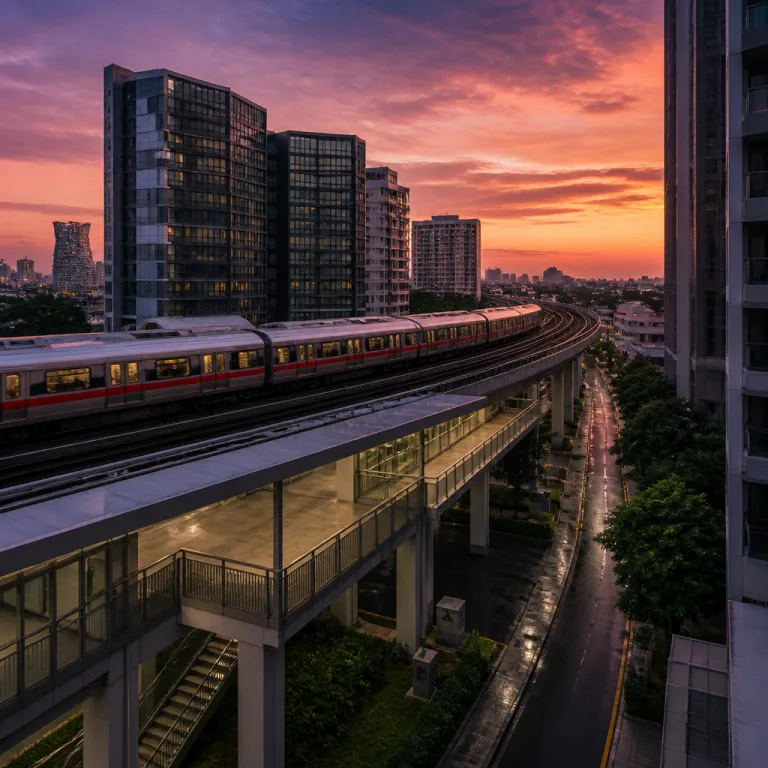
Why the MRT is your best ally for a hotel stay in Singapore
For a hotel guest planning how to move around Singapore, the MRT quickly becomes the smartest starting point. The Mass Rapid Transit rail network is the backbone of public transportation island wide, linking major districts, shopping belts, and business hubs with a reliability that makes taxi rides feel like a backup rather than a necessity. When you choose a place to stay in Singapore, proximity to one of the roughly 130 MRT stations can matter more than an extra star rating or a slightly larger room.
Singapore MRT lines form a dense rapid transit system that lets you glide from Changi Airport to Marina Bay, Orchard Road, or the Central Business District in under an hour, even at busy time periods. According to the Land Transport Authority (LTA) Rail Statistics 2023, there were 134 MRT and LRT stations in operation as of end‑2023, and the network continues to expand. LTA oversees this integrated public transport system, while SBS Transit and SMRT Corporation operate the trains and connecting buses, so the entire setup is designed to work as one seamless experience for every Singapore visitor. For someone comparing hotels, this means you can confidently prioritise access to MRT stations over renting a car, which often adds parking costs, navigation worries, and traffic stress to your travel budget.
Daily ridership reached about 3.4 million MRT passenger trips in 2023, based on LTA’s 2023 annual figures, a volume that shows how deeply rail and bus travel are woven into daily life in Singapore. That scale translates into frequent trains, clear signage in English, and predictable journey times, all of which help first time visitors feel at ease when they move around the city. If you are weighing the leisure activities Singapore offers against your meeting schedule, the rail network lets you do both without worrying about rush hour gridlock or unpredictable taxi queues.
From Changi Airport to your hotel: cards, passes, and what to pay
Landing at Changi Airport, your first decision about how to use the MRT in Singapore is which payment method to rely on. You can buy an EZ-Link card at MRT stations or convenience stores, or simply tap a contactless bank card to pay in SGD for each ride on trains and buses. For a Singapore tourist staying several nights, the Singapore Tourist Pass (STP) currently offers unlimited public transport on MRT, LRT, and basic bus services, which can be excellent value if you plan to explore Singapore intensively; always check the latest STP prices and validity on official channels, as details and card types may change over time.
The official guidance is clear: “How to buy an EZ-Link card?” and “Are there discounts for tourists?” are answered directly by the operators as follows: “Available at MRT stations and convenience stores.” and “Yes, with the Singapore Tourist Pass.”. These products sit at the heart of the fare system, letting you transfer between buses and MRT lines without juggling coins or paper tickets at every station. When you compare hotel offers, factor in whether the nearest station has a TransitLink ticket office or passenger service centre, because that makes it easier to resolve card issues, get refunds, or top up before a long day of travel.
Many visitors ask whether a stored value card such as EZ-Link or NETS FlashPay is better than paying per ride with a bank card, and the answer depends on your itinerary and length of stay. As a rough example, a single off‑peak trip from Changi Airport to City Hall station on the East West Line typically takes about 40 minutes and costs around SGD 1.90–2.10 with an adult stored value card, while the same journey paid by contactless bank card is usually a few cents higher. If you are a frequent Singapore visitor who returns often, a reusable travel card can simplify future trips around the island, while contactless bank cards suit short stays with minimal planning. Either way, you avoid the higher costs of a rental car, and you keep your transportation expenses transparent, with fares clearly displayed in SGD before you tap in at the gates.
Choosing the right hotel location for effortless MRT access
When you are booking a hotel, the most practical way to think about using rail to get around Singapore is to start with the map, not the minibar. Look for properties within a five to eight minute walking distance of key MRT stations such as City Hall, Raffles Place, Bugis, Dhoby Ghaut, or Outram Park, because these are major interchanges that shorten travel time across multiple lines. Staying near these hubs means you can reach Marina Bay, Orchard Road, and heritage districts like Chinatown or Kampong Gelam with just one or two train changes.
Hotels in Singapore that sit directly above or beside MRT stations effectively plug you into the wider public transport system, including connecting buses that fan out into residential and business neighbourhoods. This integration between buses and trains is a deliberate feature of transport planning, aimed at reducing car dependency and easing congestion on key roads. For business travellers, that can mean a predictable 20 minute commute instead of a variable 45 minute taxi ride, especially during morning and evening peaks.
Consider also how your hotel location aligns with your personal list of experiences Singapore offers that you want to enjoy, from hawker centres to museums and waterfront walks. If you plan to explore Singapore by night around Marina Bay, staying on the Downtown Line or Circle Line can cut late night travel time and reduce your reliance on taxis or ride hailing apps. Families might prefer areas like Novena or HarbourFront, where MRT stations connect quickly to malls, attractions, and bus interchanges, making every day’s transport logistics simpler and more predictable.
Using MRT, buses, and walking together during your stay
Once you have checked into your hotel, the most efficient way to think about navigating Singapore without a car is to combine trains, buses, and walking. The MRT gives you fast, air conditioned journeys between major nodes, while buses fill in the gaps for shorter hops into residential streets or hillside parks. Many central districts are compact enough that a ten minute walking stretch at either end of a bus or train ride will cover everything you need for the day.
Singapore’s public transport network is designed as a single integrated system, so your card or contactless payment works seamlessly on both MRT lines and regular buses. Timetables and route maps are posted at MRT stations and bus stops, and mobile apps from the operators show real time arrivals for buses and trains, which helps you plan transfers with minimal waiting time. For hotel guests, this means you can leave your room, check the next train, and be at Marina Bay or Orchard Road with almost no uncertainty about when you will arrive.
Walking is often underrated, yet it is one of the most pleasant ways to explore Singapore once you have used public transport for the longer legs of your journey. Many MRT stations are linked by underground passages to malls and office towers, so you can stay out of the heat or rain while moving around Singapore’s core districts. Combine these sheltered routes with short taxi segments only when you are carrying luggage or returning late, and you will keep both your travel budget and your daily stress levels under control.
When to choose taxis, ride hailing, or a car instead of the MRT
Even if you master the rail system, there are moments when taxis or ride hailing services make sense. Very early morning departures before the first train at about 5:30, or late night returns after the last service around midnight, are classic situations where a taxi becomes the most practical option. First and last train timings vary slightly by line and station, so it is worth checking the latest schedules in an official journey planner or operator app before you set out. Families with bulky luggage or elderly travellers may also appreciate door to door transport, especially when moving between hotels and Changi Airport.
Traditional taxi companies and app based ride hailing platforms operate side by side, giving you a wide choice of ride options at different price points. Metered taxis are easy to find at official stands outside major MRT stations, malls, and hotels, while ride hailing apps allow you to compare estimated fares in SGD and waiting times before you commit. For most visitors, these services complement rather than replace public transport, filling gaps when the MRT and buses are less convenient or when you are travelling in a group and can share the cost.
Renting a car is rarely necessary in Singapore, given the density of MRT stations and the reach of buses into almost every neighbourhood. Parking fees, electronic road pricing, and one way street systems can make driving more complex than simply relying on the rail and bus network that locals use every day. Unless you have very specific needs, such as transporting equipment or visiting remote industrial areas, you will usually find that public transport and occasional taxis cover all your travel requirements with less effort.
Practical etiquette and safety tips for stress free MRT journeys
Knowing how to use Singapore’s trains confidently is not only about routes and fares, it is also about etiquette. Locals queue in orderly lines on platforms, keep right on escalators, and leave space for passengers to alight before boarding, which keeps the flow smooth even at peak time. You should also remember that no eating or drinking is allowed in stations and trains, a rule that is enforced to maintain cleanliness across the entire network.
The MRT and associated public transport services are designed with safety and accessibility in mind, which is reassuring for solo travellers and families. Clear signage, platform screen doors, CCTV coverage, and staff presence at many MRT stations contribute to a sense of security that many first time visitors comment on after they explore Singapore by train. The operators confirm that the network is inclusive: “Is the MRT wheelchair accessible?” is answered with a simple statement, “Yes, all stations have accessibility features.” which includes lifts, tactile flooring, and barrier free routes.
For hotel guests, a few small habits will make every journey smoother, such as preparing your card before reaching the fare gates and moving away from the entrance after tapping in. Keep your valuables close, as you would on any public transport system, but you will likely find that travel across Singapore feels calmer and more orderly than in many large cities. With these basics in place, you can focus on the more enjoyable things Singapore offers, from waterfront walks at Marina Bay to late night suppers in vibrant neighbourhoods just a few stops from your temporary home.
Key figures that show how efficient Singapore’s MRT really is
- Singapore’s MRT and LRT network included 134 stations across the island as of end‑2023, according to the Land Transport Authority Rail Statistics 2023, giving most urban districts at least one station within a short bus ride or walking distance.
- Daily ridership on the MRT reached roughly 3.4 million passenger trips in 2023, based on LTA data from its 2023 annual report, which demonstrates how central public transport is to everyday travel compared with private car use.
- First trains typically start operating around 5:30 in the morning, while last services run close to midnight, though exact timings differ by line and station; current schedules are published by the operators and updated when necessary.
- The integration of MRT lines with bus services has been a core policy objective, helping to reduce traffic congestion and shorten average travel times across Singapore’s dense urban corridors.
| Sample trip | Approx. travel time | Indicative adult fare (stored value) |
|---|---|---|
| Changi Airport → City Hall | ~40 minutes | About SGD 2.00 |
| City Hall → Orchard | ~5 minutes | About SGD 0.90 |
| HarbourFront → Bugis | ~18 minutes | About SGD 1.50 |
FAQ: navigating Singapore’s MRT during your hotel stay
How do I get from Changi Airport to my hotel by MRT?
From Changi Airport, follow the signs to the airport MRT station, buy an EZ-Link card or use a contactless bank card, then take the train towards Tanah Merah and transfer to the East West Line for most city destinations. Many central hotels are within a short walking distance of stations like City Hall, Raffles Place, or Bugis, so you can usually complete the journey with just one or two line changes. If your hotel is not near a station, you can connect to buses or take a short taxi ride from the nearest stop.
Is the Singapore Tourist Pass worth it for hotel guests?
The Singapore Tourist Pass is good value if you plan to use MRT and buses several times a day, especially when you stay three nights or more. It offers unlimited rides on public transport within the validity period, which simplifies budgeting because you pay a fixed amount in SGD upfront. For shorter stays or light usage, paying per trip with an EZ-Link card or contactless bank card may be more economical; always confirm the latest STP prices and terms before you buy, as products and fares are reviewed periodically.
How can I plan my MRT routes before leaving the hotel?
You can use official operator apps or widely used map apps to plan MRT and bus routes in real time. These tools show train frequencies, estimated travel time, and walking connections between stations and your hotel, which helps you avoid unnecessary transfers. Many hotels also provide printed MRT maps at reception, so you can sketch out your day’s transport plan before heading out.
Are MRT trains and stations accessible for travellers with mobility needs?
All MRT stations in Singapore are equipped with lifts, ramps, and other accessibility features, making them suitable for wheelchair users and travellers with strollers. Platform screen doors and level boarding at most stations make it easier and safer to enter and exit trains. If you need extra assistance, you can approach station staff, who are trained to help with directions, boarding, and route planning.
What is the best way to pay for MRT rides during a business trip?
For business travellers, using a contactless credit or debit card is often the most convenient way to pay for MRT and bus rides, because it avoids the need to manage a separate stored value card. Fares are charged in SGD directly to your bank account, and you can later reconcile transport expenses from your card statement. If you visit Singapore frequently, an EZ-Link card may still be useful, as it can be topped up and reused on future trips around the city.